
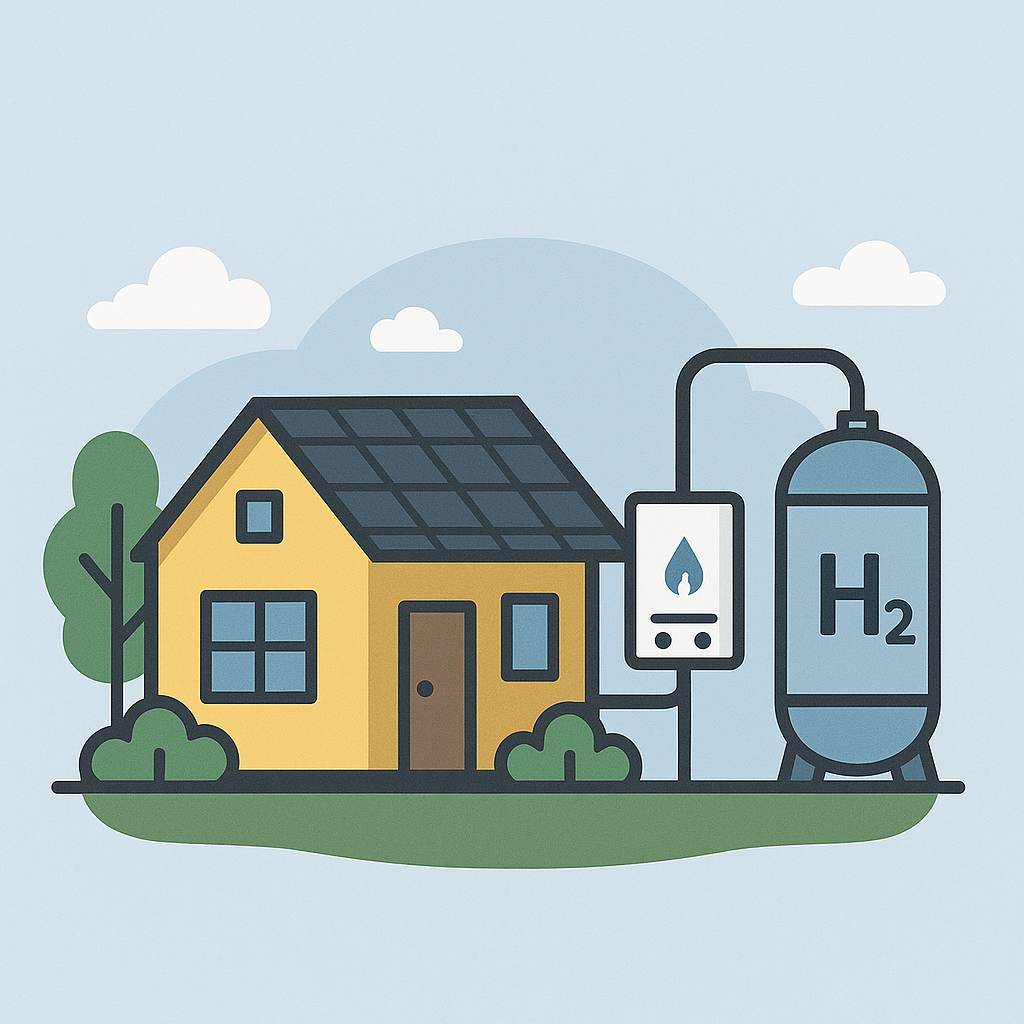
At first glance, hydrogen can seem like an attractive heating technology, but are we underestimating the challenges that this technology poses? Is widespread retrofitting realistic?
For a while, hydrogen was touted as being the future of heating, but its practicalities amongst our existing building stock remains a live debate. The majority of gas boilers are not ‘hydrogen ready’, and those that are often only support a 20% blend. Full hydrogen conversion would require a replacement of our existing gas infrastructure.
Hydrogen certainly has its benefits, so it is easy to see how people are excited at the prospect of utilising it in our day-to-day heating needs. One of hydrogen’s most attractive features is that, at the point of use, it provides zero carbon emissions, with the only byproduct being water vapour. This adds to the attractiveness of the technology in high-density urban areas, where air quality could be of concern. Additionally, when it is produced from renewables through electrolysis, hydrogen can be a green alternative that could balance the grid by utilising stored renewable electricity.
However, there are more challenges to consider, hydrogen is not as energy-dense when compared to natural gas, so boilers must burn more gas volume to emit the same heat load. There are also leakage concerns, as hydrogen molecules are small and able to escape through existing pipework; therefore, whole systems need to be reviewed when considering hydrogen, not just the heat source. Serious consideration needs to go into the safety measures around hydrogen systems, and public perceptions on safety also cannot go unaddressed.
Retrofitting with hydrogen isn’t as straightforward as some advocates might suggest. Likewise, there are always opportunities for technologies that both ease carbon emissions and do not strain the electrical grid at the same time, so it is foolish to discount this technology. We should be cautious in assessing where this transition might be appropriate.
Leave a Reply